
For the last semester, I have been thoroughly researching the critically acclaimed television show, “The Office”. This show has a unique style to it in which they present humor by using satire based off of stereotypes and mocking real life corporate issues as the primary basis of their show. The office uses satire to touch on issues like sexual orientation, gender, race, body image, etc.

The Office is a television series that began on March 24th, 2005. The series was a remake of the original British television series, “The Office” in which Ricky Gervais plays the “british Michael Scott”. The series did not do too hot, as it only ran for two seasons until its end date on December 27th, 2003. The american version of The Office, however, has remained on Netflix’s top trending category list for a number of years now. The series is known for it’s documentary-style narrative in which the characters are aware of the cameras that are filming them at all times, all while engaging and keeping the camera crew as apart of the staff. The camera crew is supposed to represent the audience, in which the characters are actively engaging with us in order to make us feel closer to the show itself and the characters of Dunder Mifflin. The show takes place in a dull, average looking office building in which average looking every day people are sharing a work space for. This is supposed to give off the asethetic of, “what could possibly happen in an average looking american work place that’s worth making a documentary about?”. The satirical irony of this being that chaos goes on all the time lead by mainly Michael Scott, the dim-witted regional manager always keeping things interesting. The genuine purpose of the show being that you can always find meaning in the most unexpected places, even in a small workplace in Scranton Pennsylvania where this hilarious chaos took place for nine seasons.

As mentioned before, the Office was an adaptation of the british broadcasting company by american television show writer Greg Daniels, who worked on shows like the Simpsons and Saturday Night Live which also present lots of satirical humor. The series initially received low ratings upon debuting, but became the highest-rated scripted series on NBC by its second season. The series has won four Primetime Emmy awards and several other awards.

For my critical analysis, I will try t0 use evidence in order to describe certain stereotypes that I believe are presented by Michael Scott in a satirical fashion in which playing on exaggerated ideas reflective of actual societal issues. This is done by using a certain narrative and production style in which we, the actively engaged audience, feels apart of the show whenever Jim gives us a concerned look about something Michael has touched upon involving western stereotypes(gender, sexism, race, body image).

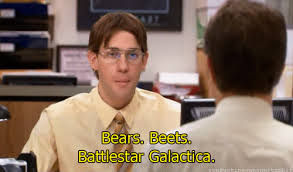
The episode “Diversity Day”, season 1 episode 2, is a perfect example of how the Office uses exaggerated stereotypes in order to bring awareness to substantial issues. Corporate sends Mr. Brown, the leader of the diversity training taking place at the branch, to lead a seminar on diversity. Coporate’s reason for the diversity training was 100 percent due to Michael Scott’s inappropriate jokes concerning racism. The entire episode Michael consistently mentions that he loves diversity and wants to celebrate it, when ironically he is sabotaging the whole entire seminar by making it more inappropriate. In the episode, Michael makes everyone play the headbands game in which each staff member put a certain race on their forehead while the other staff members used stereotypes as hints in order to help them guess what they were. Instead of celebrating diversity, Michael makes each staff member say demeaning things about different races in order to learn more about them. That is the beauty of the humor of the office. Michael is supposed to be the voice of ignorance while Jim, who we as the audience are supposed to relate with the most, is the voice of reason. The zoom-ins on Jim’s face represent the message that is actually being given to the audiences of the series, while it is not clearly verbally mentioned. Michael Scott time after time will display ignorance with genuine confidence, all while we an audience are aware that everything he says should be taken with a grain of salt and not seriously.
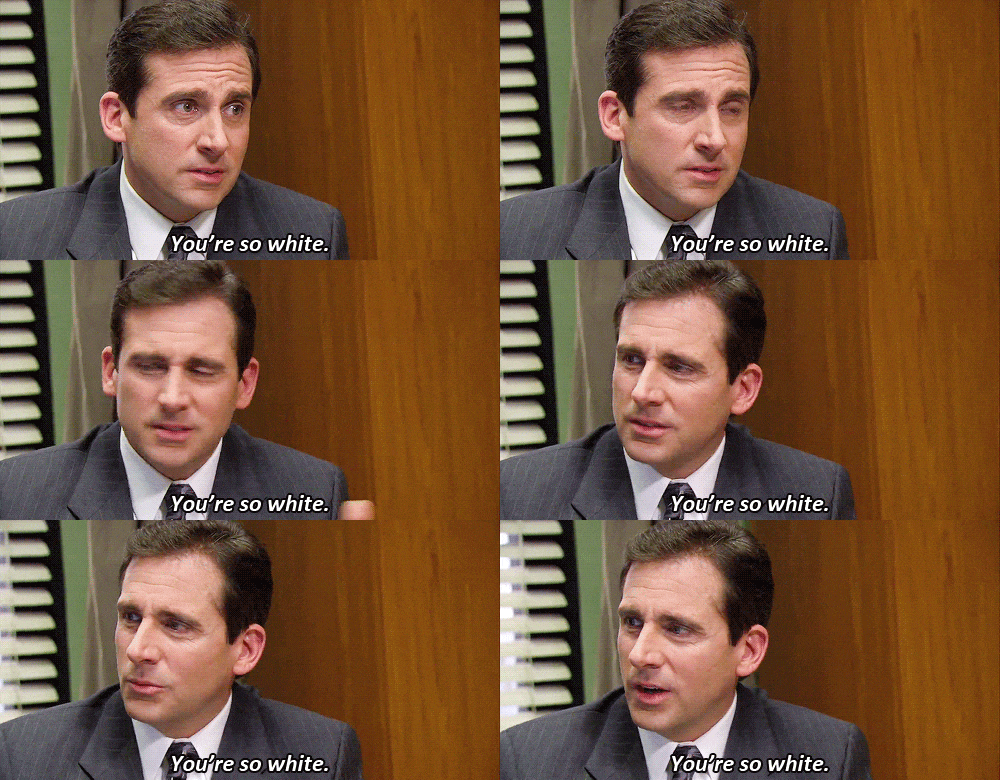
The categories I have chosen to analyze are race, sexual orientation, gender and body image and how they are portrayed in the Office. I will use specific examples from the first season that will prove my point further.
Gender
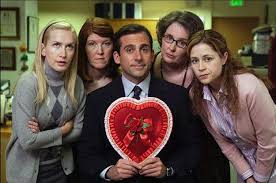
Right off the bat in the pilot episode, the series starts off with Michael talking to Pam after the opening scene and right away Michael is shown harassing Pam solely because she is a woman. Pam is introduced and Michael immediately addresses the camera, “This is our receptionist Pam, and if you think she’s cute now, you should’ve seen her a couple years ago!” (Season 1, Pilot). Michael makes it obvious that he does not take Pam seriously, only priding her on being “the most attractive in the office” which he mentions multiple times throughout the series. Michael prides himself on respecting women all the time, meanwhile all the women in the office feel clearly violated by him.
Sexual Orientation

In episode 5, Basketball, Michael is quoted saying: “Just try not to be too gay on the court. And by gay I mean, um, you know, not in a homosexual way at all. I mean the uh, you know, like the bad-at-sports way. I think that goes without saying.” This quote alone accurately depicts how Michael will say things that relate directly to prior stereotypes of our society. Michael will consistently state that he supports homosexuality, while his actions and dialogue are ironic of that. Throughout the series, one of the employees at Dunder Mifflin(Oscar) comes out openly as gay, in which a substantial amount of episodes are written purely around just Michael Scott trying to be politically correct around him and failing miserably. Oscar ends up receiving a paid vacation by corporate because of how much prejudice Oscar endures from Michael.
Race

Above I dove more into the Diversity Day episode, which is a perfect example of how racism is used for the exaggerated stereotypes in the office’s narrative structure. Michael is infamous for trying to be politically correct to the minorities around the office. The staff members who are picked on the most are Oscar, who is constantly pointed out by Michael for being Mexican and homosexual. “Is there a term besides Mexican you prefer or is it too offensive?” (Season 1, Diversity Day). The next being Stanley, who is the only African American employee in the office. The last being Kelly, who is Indian. Even in the first season, it is made known that these three staff members are unique to the rest of the Caucasian staff because of Michael awkwardly addressing it.
Body Image
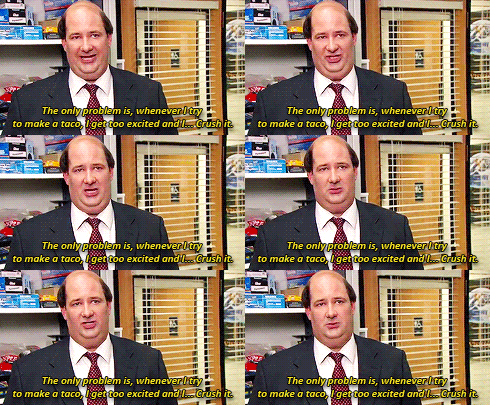
Each cast member is used strategically to be portrayed as unique and central to the storyline. Three characters are pointed out consistently for being over-weight by Michael, which are Stanley, Kevin and Phyllis. Michael and Dwight, Michael’s oblivious and loyal follower, are shown being cruel about the three staff member’s body weight.
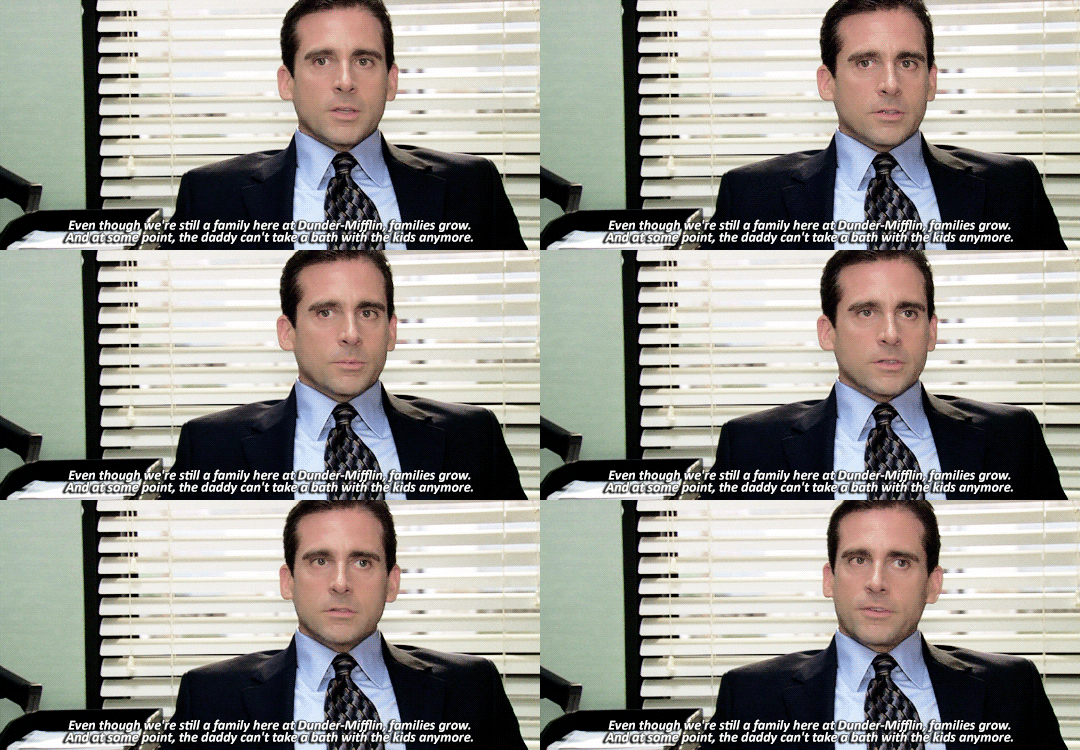
All of these characters are significant to the narrative structure of the show. The exaggerated societal stereotypes are represented by the staff members and the issues that arise with these stereotypes are represented by Regional Manager Michael Scott, who is supposed to be setting a good and moral example for his company. The satirical irony of the show is what makes the Office unique. I have enjoyed thoroughly analyzing this show because it gave me more insight on what is in between the lines of the script. It made me find more meaning in the show that I had not already known about even being a huge fan of the show before starting this course. I hope everyone can come to understand and appreciate the narrative structure of the Office just as much as I do.

























 Alyssa's Blog